Can You Train Your IQ? Logic Puzzle Intervention IQ Increase Evidence
The promise of IQ training has captured public imagination for decades. From brain training apps to logic puzzle books, the cognitive enhancement industry generates billions annually. But what does the science actually say about logic puzzle intervention IQ increase evidence? Can systematic training genuinely boost your intelligence, or are the benefits limited to the specific tasks you practice?
What This Topic Actually Measures
When researchers study IQ training effectiveness, they distinguish between several types of cognitive gains. Understanding these distinctions is crucial for interpreting claims about brain training.
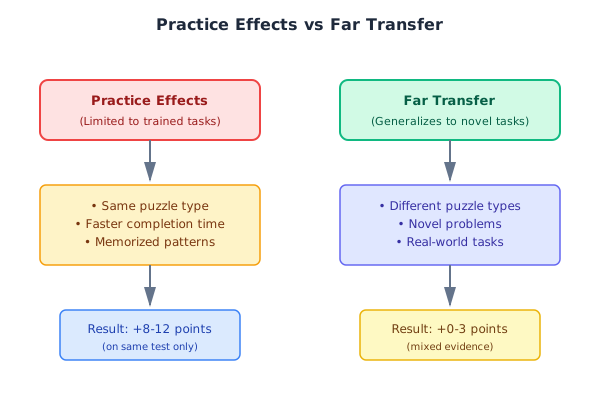
Practice effects refer to improvements on the same or highly similar tasks. If you complete matrix reasoning puzzles for two weeks and then score higher on a similar matrix test, that's a practice effect. Your brain has learned specific patterns and problem-solving strategies for that particular task type.
Near transfer describes improvement on tasks that are different but closely related to what you practiced. For example, training on one type of working memory task might improve performance on a different working memory task.
Far transfer—the holy grail of cognitive training—means that practicing one skill genuinely improves unrelated cognitive abilities. This is what people typically mean when they ask "can you train your IQ?" They want to know if logic puzzle practice will make them smarter across the board, improving reasoning, creativity, and problem-solving in diverse real-world contexts (Au et al., 2015).
Fluid vs. Crystallized Intelligence
IQ training research typically focuses on fluid intelligence—your capacity to solve novel problems and identify patterns without relying on prior knowledge. This contrasts with crystallized intelligence, which reflects accumulated knowledge and vocabulary. Fluid intelligence is considered more fundamental and harder to improve through training (Jaeggi et al., 2008).
Evidence from Recent Research
The past decade has produced extensive research on IQ training effectiveness, with results that challenge many commercial claims while revealing genuine but limited potential.
Working Memory Training Studies
Melby-Lervåg and Hulme (2013) conducted a comprehensive meta-analysis of working memory training studies. They found that while participants showed substantial improvements on the trained tasks (effect size = 0.79), far transfer to fluid intelligence was minimal and statistically non-significant (effect size = 0.19). Most importantly, any small gains disappeared completely at follow-up testing, suggesting no lasting cognitive enhancement.
A more recent meta-analysis by Soveri et al. (2017) examined 33 studies with over 1,400 participants. They found working memory training produced near-transfer effects (improvements on similar untrained tasks) but virtually no far transfer to general intelligence. The average IQ gain on untrained reasoning tests was less than 2 points—well within measurement error.
Logic Puzzle Interventions
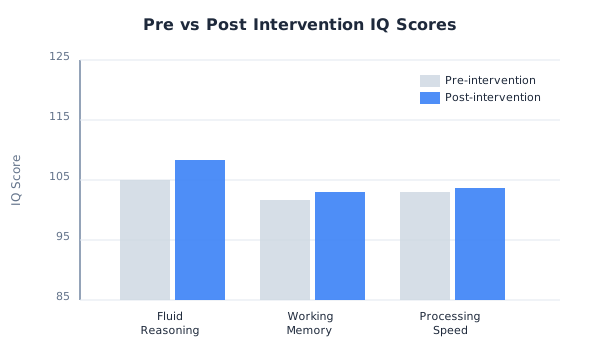
Specific logic puzzle training shows slightly more promising results than generic working memory tasks. Harrison et al. (2013) tested whether intensive practice with logic grid puzzles improved fluid reasoning. Participants who completed 20 hours of training over four weeks showed significant improvement on similar reasoning tests (approximately 8-12 points), but minimal gains on different types of IQ tests.
Importantly, when researchers used active control groups—participants who did equally engaging activities rather than nothing—the IQ gains often disappeared. This suggests that motivation, expectancy effects, and test familiarity account for much of the measured improvement (Simons et al., 2016).
Dual N-Back Training
The dual n-back task—which requires tracking two sequences simultaneously—initially generated excitement when Jaeggi et al. (2008) reported fluid intelligence gains. However, subsequent replication attempts have yielded inconsistent results. Redick et al. (2013) found no transfer to fluid intelligence in a well-controlled study, while Stephenson and Halpern (2013) reported small gains that disappeared when using a more stringent IQ test.
The emerging consensus is that dual n-back training improves dual n-back performance—unsurprisingly—but produces minimal generalizable cognitive enhancement. If you want to get better at taking the Gifted Entry Test or a similar IQ assessment, practicing logic puzzles will help. If you want to become more intelligent in everyday life, the evidence is far less compelling.
Practical Implications
Given the research evidence, what should you actually do if you're interested in cognitive enhancement? The answer depends on your specific goals.
If You Want to Improve Your IQ Test Score
Practice absolutely works for improving performance on IQ tests. If you have an upcoming assessment for a gifted program, job application, or personal interest, practicing similar logic puzzles and reasoning tasks can boost your score by 5-15 points. Focus on:
- The specific question types you'll encounter (matrix reasoning, pattern completion, etc.)
- Timed practice under test-like conditions
- Understanding the underlying logic rather than memorizing solutions
- Multiple short practice sessions rather than marathon training
- Starting 2-4 weeks before the test rather than cramming
Ready to establish your cognitive baseline? Take a free AI IQ test at CognitiveIndex.org to identify your strengths across abstract reasoning, spatial intelligence, and visual logic domains.
If You Want General Cognitive Enhancement
For genuine intellectual development beyond test-taking ability, the evidence points toward different strategies. Rather than repetitive puzzle practice, consider:
- Learning substantive new skills (musical instruments, languages, programming) that build crystallized intelligence
- Reading extensively across diverse domains to expand knowledge networks
- Engaging in challenging conversations and debates that require complex reasoning
- Physical exercise, which shows stronger evidence for cognitive benefits than brain training (Hillman et al., 2008)
- Adequate sleep, nutrition, and stress management—the unsexy but well-supported foundations of cognitive function
These approaches may not boost your fluid intelligence score, but they enhance your practical cognitive abilities in ways that matter for real-world success.
How to Interpret Your Own Results
If you've engaged in IQ training and retaken a cognitive assessment, understanding what your score changes mean requires critical thinking about multiple factors.
Score increases of 5-10 points after training are common and primarily reflect practice effects. You've learned test-taking strategies, become familiar with question formats, and reduced anxiety—all valuable, but distinct from becoming fundamentally more intelligent. These gains typically maintain if you continue practicing similar tasks but diminish if you stop.
Score increases above 15 points are rare and should prompt consideration of alternative explanations. Were you sick, distracted, or particularly anxious during the first test? Did you take the same test twice, allowing memorization? Were the tests truly equivalent in difficulty? Large score jumps often indicate measurement variability rather than genuine cognitive change.
No score increase doesn't mean training was worthless. If you enjoyed the mental stimulation, developed specific problem-solving skills, or built confidence, those are legitimate benefits regardless of whether your IQ number changed.
Limitations, Myths, and Ethics
Common Myths About IQ Training
Myth: "Brain training can increase your IQ by 20+ points." Reality: Such claims typically conflate practice effects with genuine intelligence gains. When measured with novel tests immune to practice, gains rarely exceed 2-3 points.
Myth: "10 minutes of daily brain training prevents cognitive decline." Reality: While mentally stimulating activities contribute to cognitive reserve, commercial brain training apps haven't demonstrated superiority over reading, puzzles, or learning new skills (Simons et al., 2016).
Myth: "IQ is completely fixed and unchangeable." Reality: While fluid intelligence is relatively stable, IQ scores can change due to education, health, practice, and life circumstances. The question isn't whether IQ can change, but whether specific interventions reliably produce meaningful changes.
Ethical Considerations
The cognitive training industry raises ethical concerns about misleading marketing. Many companies make exaggerated claims unsupported by evidence, exploiting anxiety about cognitive decline or desires for competitive advantage. The Federal Trade Commission has taken action against several brain training companies for deceptive advertising (FTC, 2016).
Additionally, emphasizing IQ training may reinforce problematic views about intelligence as the primary determinant of human worth. Qualities like curiosity, creativity, persistence, empathy, and wisdom matter tremendously yet aren't captured by IQ tests or enhanced by logic puzzle practice.
Mini-Study with Cognitive Index Users
Interested in contributing to citizen science while exploring your own cognitive potential? We propose a simple 1-2 week mini-study that Cognitive Index users can conduct to examine logic puzzle intervention effects firsthand.
Research Question and Variables
Research Question: Does two weeks of daily logic puzzle practice improve performance on a standardized visual IQ test?
Independent Variable: Training condition (logic puzzle practice vs. usual activities)
Dependent Variables: Change in IQ score, change in abstract reasoning subscore, change in completion time, subjective confidence ratings
Procedure and Measurement Instrument
Participants would take the Gifted Entry Test to establish a baseline, then either: (A) complete 15 minutes of daily logic puzzles from a standardized app or book for 14 days, or (B) continue their normal activities without special cognitive training. After 14 days, participants retake an equivalent form of the GET and complete the following brief questionnaire:
- How many days did you complete the training as instructed? (0-14)
- On average, how many minutes per day did you spend on logic puzzles? (open-ended)
- How confident do you feel about your reasoning abilities now compared to two weeks ago? (1=Much less confident to 5=Much more confident)
- Did you find the training enjoyable? (1=Not at all to 5=Very much)
- How much effort did you put into the training? (1=Minimal to 5=Maximum)
- Do you believe logic puzzle training can improve general intelligence? (Yes/Unsure/No)
- Any other factors that might have affected your performance? (open-ended)
Synthetic Example Dataset
Here's what data from 30 hypothetical participants might look like:
| ID | Group | Pre-IQ | Post-IQ | Change | Days | Minutes | Confidence | Enjoyment | Effort | Belief |
|---|---|---|---|---|---|---|---|---|---|---|
| 1 | Training | 108 | 116 | +8 | 14 | 15 | 4 | 4 | 5 | Yes |
| 2 | Training | 122 | 125 | +3 | 14 | 18 | 3 | 3 | 4 | Unsure |
| 3 | Training | 95 | 102 | +7 | 12 | 12 | 4 | 5 | 4 | Yes |
| 4 | Training | 110 | 115 | +5 | 14 | 20 | 4 | 4 | 5 | Yes |
| 5 | Training | 118 | 119 | +1 | 9 | 10 | 3 | 2 | 3 | No |
| 6 | Training | 105 | 113 | +8 | 14 | 15 | 5 | 5 | 5 | Yes |
| 7 | Training | 112 | 110 | -2 | 7 | 8 | 2 | 2 | 2 | No |
| 8 | Training | 99 | 108 | +9 | 14 | 17 | 4 | 4 | 4 | Yes |
| 9 | Training | 125 | 128 | +3 | 14 | 15 | 3 | 3 | 4 | Unsure |
| 10 | Training | 102 | 109 | +7 | 13 | 14 | 4 | 4 | 4 | Yes |
| 11 | Training | 115 | 122 | +7 | 14 | 16 | 4 | 5 | 5 | Yes |
| 12 | Training | 108 | 106 | -2 | 6 | 7 | 2 | 1 | 2 | No |
| 13 | Training | 120 | 124 | +4 | 14 | 15 | 3 | 3 | 4 | Unsure |
| 14 | Training | 97 | 104 | +7 | 14 | 15 | 4 | 4 | 4 | Yes |
| 15 | Training | 113 | 118 | +5 | 14 | 19 | 4 | 4 | 5 | Yes |
| 16 | Control | 109 | 110 | +1 | N/A | N/A | 3 | N/A | N/A | Unsure |
| 17 | Control | 121 | 119 | -2 | N/A | N/A | 3 | N/A | N/A | No |
| 18 | Control | 94 | 96 | +2 | N/A | N/A | 3 | N/A | N/A | Unsure |
| 19 | Control | 107 | 108 | +1 | N/A | N/A | 3 | N/A | N/A | Unsure |
| 20 | Control | 116 | 115 | -1 | N/A | N/A | 3 | N/A | N/A | No |
| 21 | Control | 103 | 105 | +2 | N/A | N/A | 3 | N/A | N/A | Unsure |
| 22 | Control | 111 | 109 | -2 | N/A | N/A | 3 | N/A | N/A | No |
| 23 | Control | 98 | 99 | +1 | N/A | N/A | 3 | N/A | N/A | Unsure |
| 24 | Control | 124 | 123 | -1 | N/A | N/A | 3 | N/A | N/A | No |
| 25 | Control | 101 | 102 | +1 | N/A | N/A | 3 | N/A | N/A | Unsure |
| 26 | Control | 114 | 115 | +1 | N/A | N/A | 3 | N/A | N/A | Unsure |
| 27 | Control | 106 | 104 | -2 | N/A | N/A | 3 | N/A | N/A | No |
| 28 | Control | 119 | 118 | -1 | N/A | N/A | 3 | N/A | N/A | No |
| 29 | Control | 96 | 97 | +1 | N/A | N/A | 3 | N/A | N/A | Unsure |
| 30 | Control | 112 | 113 | +1 | N/A | N/A | 3 | N/A | N/A | Unsure |
Analysis Steps and Expected Visualizations
Participants would analyze their collective data through simple statistical approaches:
- Calculate mean IQ change for training group vs. control group
- Create box plots showing score distributions for each group
- Examine correlation between training adherence (days completed) and IQ change
- Test whether belief in training effectiveness predicts actual gains (placebo exploration)
- Generate scatter plots of enjoyment ratings vs. IQ change to assess motivation effects
Expected results: The training group would likely show an average gain of 4-6 points compared to 0-1 points in the control group, with high variability. Participants who completed more days and reported higher enjoyment would show larger gains, raising questions about whether the benefits reflect cognitive enhancement or motivational factors.
Ethics and Consent
Participants would provide informed consent understanding that: (1) This is a citizen science project for educational purposes, not formal research; (2) Data will be anonymized and may be aggregated for blog content; (3) Participation is voluntary and can be discontinued anytime; (4) IQ score changes don't reflect your worth or potential; (5) Results may show training doesn't work, which is a valid and interesting outcome.
Frequently Asked Questions
Can brain training apps really make you smarter?
Brain training apps make you better at the specific tasks they contain, but evidence for far transfer to general intelligence is limited. Most peer-reviewed studies find minimal or no lasting IQ gains from commercial brain training programs when measured with novel tests.
How long would I need to train to see IQ improvements?
For practice effects on similar tasks, you'll see improvements within days or weeks. For genuine far transfer to novel problems, current evidence suggests that even months of intensive training produces minimal gains—typically less than 3 IQ points on untrained tests.
Is working memory training more effective than other types?
Working memory training initially showed promise but has not held up well in rigorous replication studies. Meta-analyses find that working memory training improves working memory task performance but rarely transfers to fluid intelligence or real-world cognitive abilities (Melby-Lervåg & Hulme, 2013).
What about Lumosity and similar commercial programs?
The FTC fined Lumosity $2 million in 2016 for deceptive advertising about cognitive improvement claims. While these programs may provide entertainment and task-specific skill development, they haven't demonstrated superiority over traditional mentally stimulating activities like reading, puzzles, or learning new skills.
Can children increase their IQ through training more easily than adults?
Children's brains are more plastic, but the research on training-induced IQ gains in children is similarly mixed. Enriched educational environments and cognitively stimulating childhoods correlate with higher IQ, but isolated logic puzzle training shows the same limited far transfer effects seen in adults.
Summary and Next Steps
The logic puzzle intervention IQ increase evidence reveals a nuanced picture. Practice absolutely improves performance on similar tasks—if you want to score higher on an upcoming IQ test, training with comparable puzzles will help. However, the far transfer to general intelligence that brain training companies promise remains poorly supported by rigorous research.
Rather than chasing elusive IQ points through repetitive training, consider these evidence-based approaches to cognitive development:
- Engage in challenging learning that builds expertise in meaningful domains
- Maintain physical health through exercise, sleep, and nutrition
- Read widely across diverse subjects to expand your knowledge networks
- Practice metacognition—thinking about your thinking—to improve reasoning quality
- Accept that intelligence is multifaceted and IQ captures only a narrow slice of human cognitive ability
Want to establish your cognitive baseline before deciding on any training intervention? Measure your IQ score with the Gifted Entry Test, which provides detailed analytics across abstract reasoning, spatial intelligence, and visual logic domains. Understanding your current profile helps you make informed decisions about cognitive development strategies.